
Booth design: seven decisions that separate a stand people visit from one they walk past
A visitor has a few seconds to decide whether to step into your stand or keep walking. These seven decisions settle those seconds, from the first idea to installation night.
By Kaizen editorial team3 min read
At a large exhibition a visitor passes dozens of stands an hour. They see most of them and remember almost none. The difference between a stand people visit and one they walk past is not made by floor space or budget alone, but by decisions taken early, before the first line is drawn.
1. Start with one question: what should the visitor do?
A stand built to collect leads is not the same as one that launches a product or hosts signings. Once the goal is clear, everything else follows: where the screen goes, how many seats you need, and where the serious conversations happen away from the aisle.
2. Make the identity readable from the end of the aisle
Visitors see your stand from afar before they read a word on it. Identity works at large scale here: a clear brand wall, a colour repeated with discipline, and a logo at eye level rather than at their feet. What reads from twenty metres matters more than what reads from one.
3. Design the route before the shape
Where does the visitor enter? Where do they stop first? When do they meet someone to talk to? A good stand leads its visitor gently: an open entrance, a point of attraction, then a quieter area to talk. A beautiful shape that confuses movement loses half its value.
4. A 3D design before anything is built
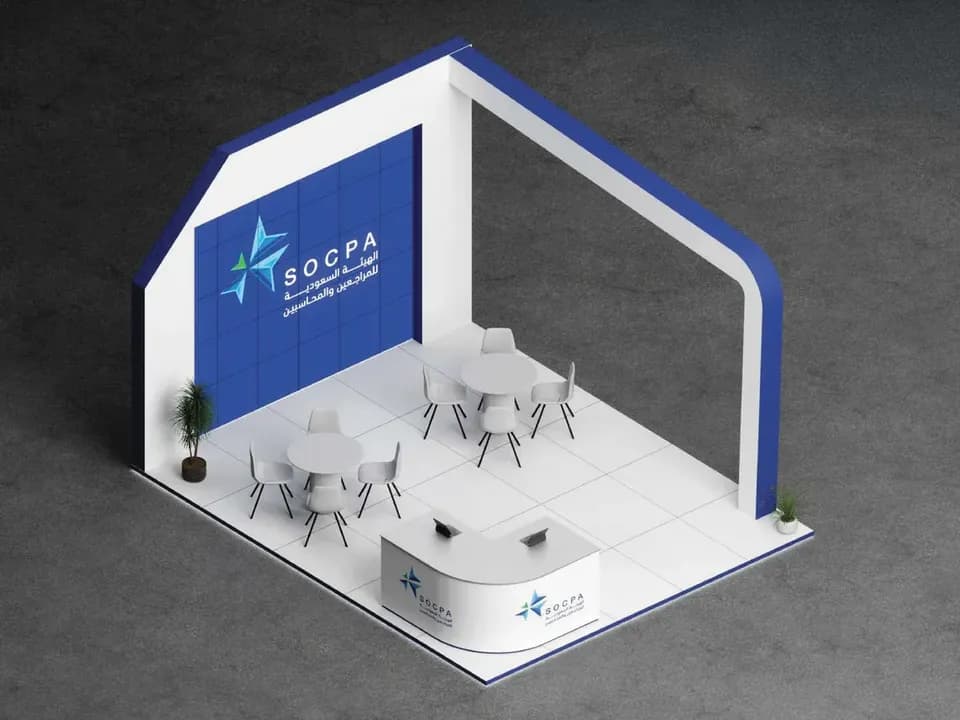
The 3D design is not just a presentation image; it is where problems are found before they get expensive. Sight lines, screen heights and lighting become clear, and everyone agrees on the result before the first panel is cut. Then come the construction drawings the build team works from.
5. Lighting is half the design
Exhibition halls are lit flat and evenly, and a stand that relies on that light looks dull however fine its materials. Considered lighting lifts the product, separates the areas and makes the stand feel larger than it is.
6. Interaction that serves the message
A touch screen, a product trial, a photo corner: every interactive element should answer one question. Does it bring the visitor closer to the goal you set at the start? If not, it is just more crowding.
7. Installation night is part of the design
The best design can stumble on installation night: sizes that don't match the site, late furniture, gaps in coordination with the organiser. So the work does not end at the drawing; supervising the build and coordinating with the organisers is what makes the stand open exactly as designed.
From our work
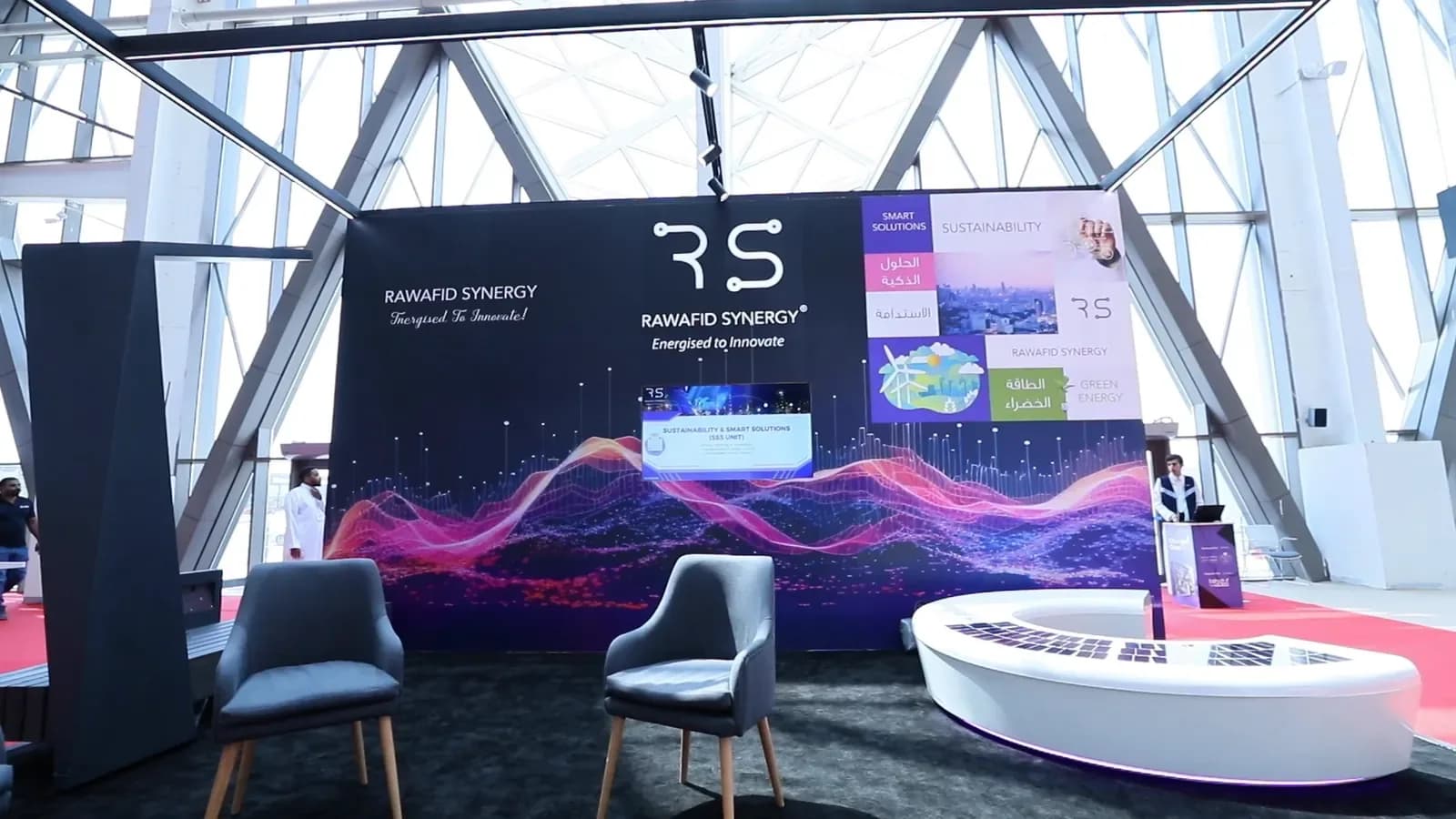
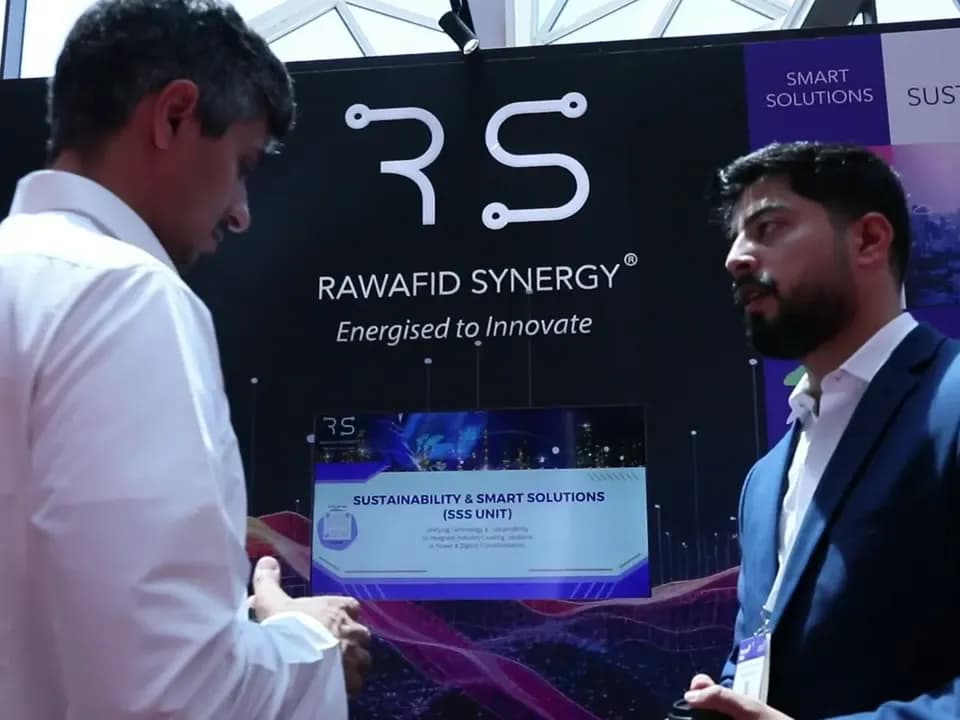
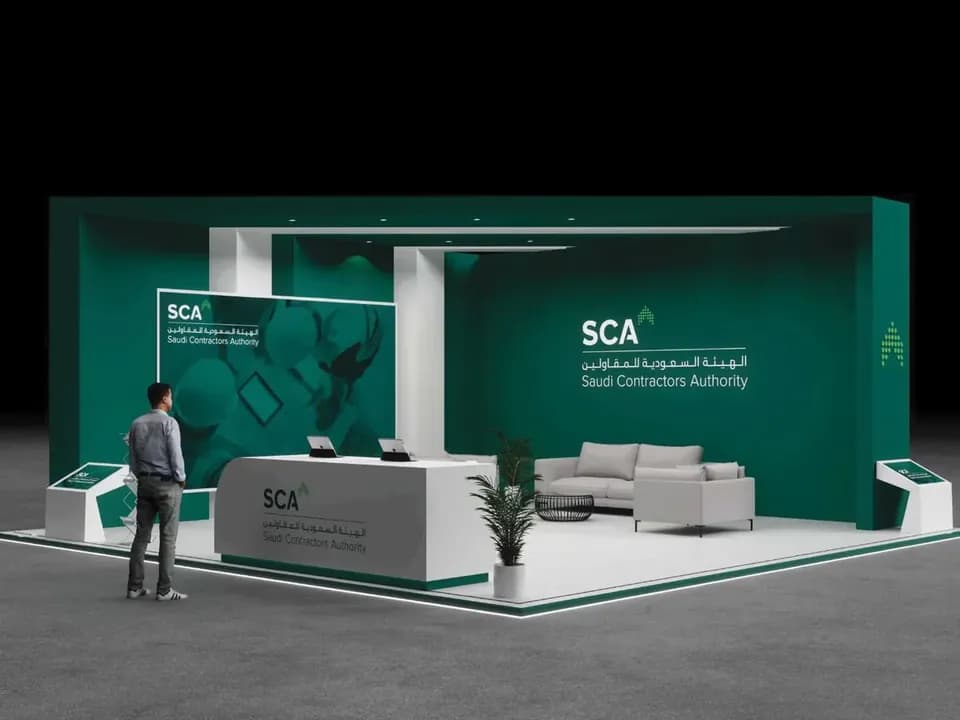
For the Rawafid Synergy pavilion at Cityscape Global we started with the 3D design, then applied the visual identity across the stand: the brand wall, the theme panels, the screens and the seating area. In our design concepts for stands of bodies such as the Saudi Contractors Authority and the Saudi Organization for Chartered and Professional Accountants, the starting point was always the client's identity and what its visitors should leave with.
Before you start: prepare these five
- One clear goal for the stand.
- The space dimensions and the organiser's requirements.
- Your brand identity and its original files.
- What will be shown: products, screens, experiences.
- Installation and dismantling dates.
If your next exhibition is close, start with the 3D design: it is the cheapest stage at which to change your mind.
Frequently asked questions
How early should we start designing the booth?
The earlier the better: the 3D design, construction drawings, furniture and equipment all take time, as do the organiser’s requirements and approval dates.
Does a small stand need a 3D design?
Yes. Even a small stand benefits: it shows sight lines, element heights and lighting before the build and saves costly changes on site.
Does Kaizen build and install the booth?
Yes. The Professional and Advanced packages provide the furniture and interactive equipment and cover on-site supervision and installation; Advanced adds project management and full coordination with the organiser.
Read also
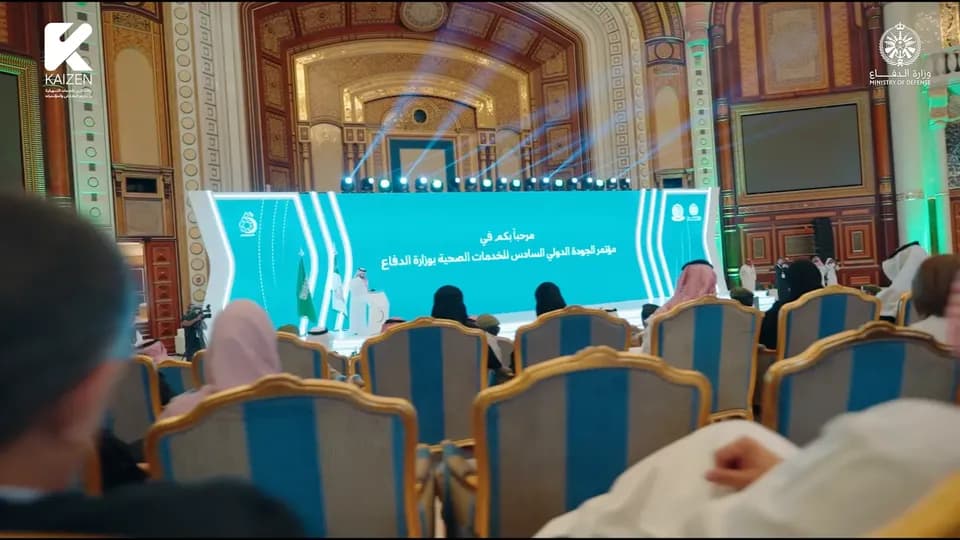
Media production3 min read
One day, months of content: how to plan your event coverage before it starts
The event ends in the evening, but its photos and films can keep working for you for months. The secret is planning the coverage before day one, not after.
Identity and design3 min read
Before you order a logo: what your brand really needs from a visual identity
The logo is the part everyone sees, but it is not the whole identity. Here is what makes a brand recognisable at a glance and consistent wherever it appears.
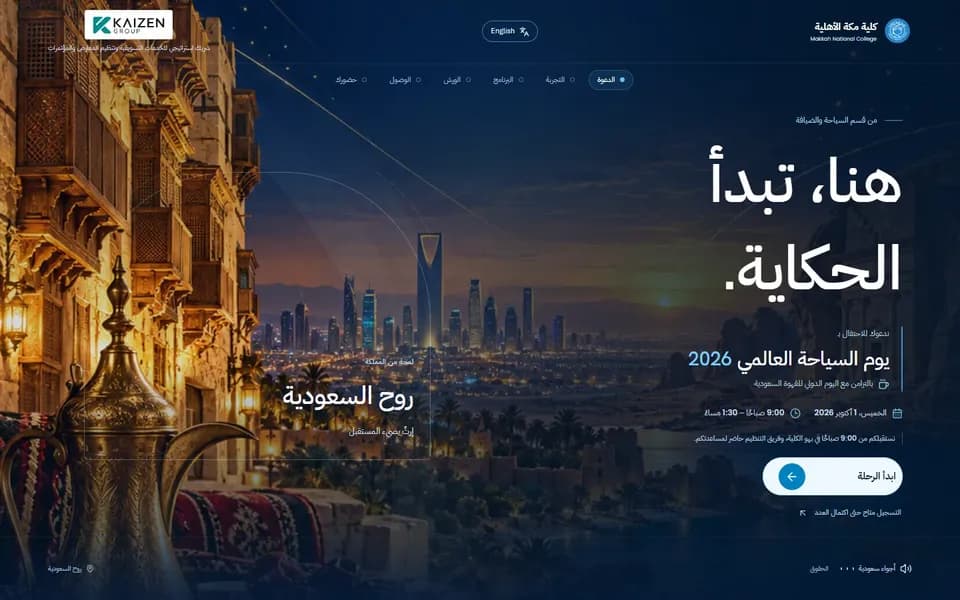
Websites and digital solutions3 min read
Is your website working for you or against you? What makes a site bring in clients
A website that is only good-looking is like a shop window with the door locked. These are the things that turn it into a channel that brings real enquiries.